|
|
|
|
Chapter
14
Ludham Businesses 1900 - 2000
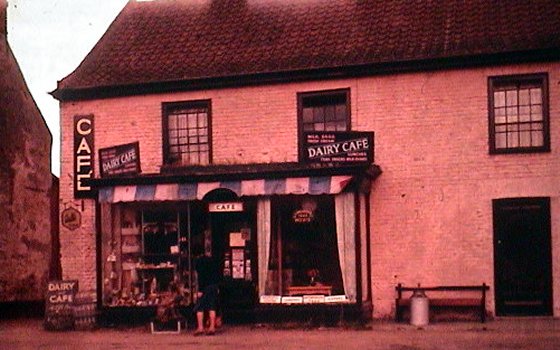
The Dairy Cafe
|
Research
– Yvonne Boldy with Wendy Chapman and Marion Roll
Text – Nigel Pope
Ludham began the 20th Century with its economy firmly
rooted in agriculture. Surrounded by rich farmland and
productive marshes, the village was sustained by the
income generated by the various farms and the
employment they created.
Many other businesses operated in the village to
provide services to the local population, and this
page is about their history.
It would be impossible (and probably not very
interesting) to list all the businesses that have ever
existed in Ludham over the past one hundred years.
This page concentrates on the larger and more visible
businesses and tells their story as the century
unfolded.
1900 to the Great War.
Many Ludham residents began the century as
agricultural labourers. These days were long before
the mechanisation of farming and farming methods had
seen little change for centuries. Many workers were
employed on a casual basis as seasonal needs dictated.
It could be a hard life.
Ludham itself would have seemed quite a remote place
in those days. The village was surrounded by rivers
and marshes and had no railway station. The motor car
had just been invented, but it is doubtful that Ludham
had ever seen one. Heavy goods were transported by
water in the sailing wherries which visited Womack
Water and Ludham Bridge. A visit to Norwich was an all
day journey by cart and the railway stations at Potter
Heigham and Hoveton/Wroxham called for a long walk.
As a result, there was a need to buy everyday items
locally and various shops and businesses were set up
in the village to meet local needs.

A trading wherry at Ludham Bridge
On the corner of School Road and The Street stands a
building which is still known locally as Cooks Corner
(after the owners in the 1920s). This building,
believed to be the oldest dwelling house in the
village, was originally Town Farm and was owned by
Aaron Neave. In 1908, Robert Allard opened a Cycle
Agency here. It later became a grocery shop operated
by Harriet England (perhaps as a result of competition
from H.D. Brooks’ cycle shop which was just across the
road). This change established a grocery and general
store in this building which would endure for the next
80 years.
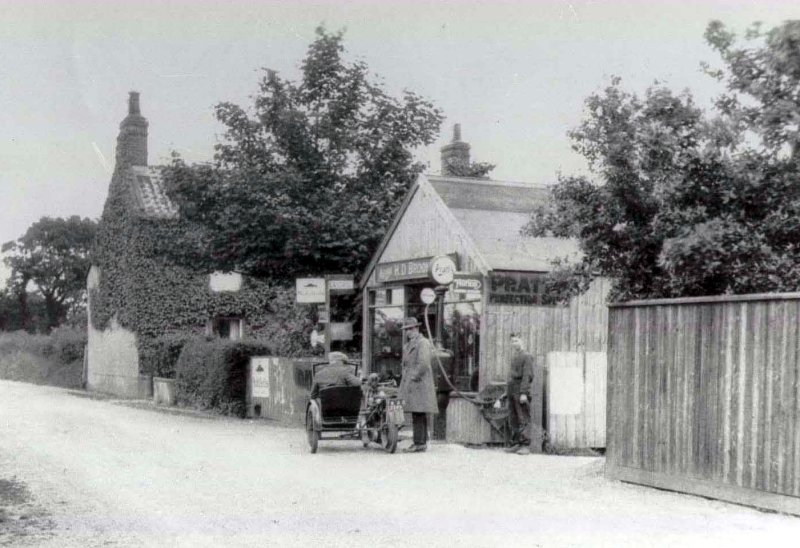
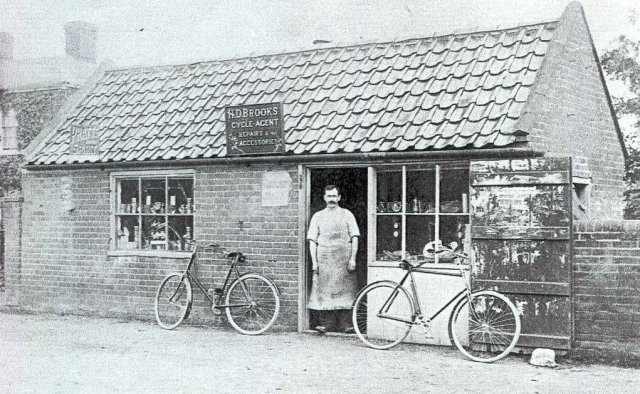
H.D. Brooks had already established his cycle shop on
The Street in the early 1900s. He operated from a
small building (still there) in which he did
cycle sales and repairs as well as shoemaking. The
shoemaker business was later taken over by Mr Clarke
and H.D. Brooks moved his business further up the road
to Catfield Road and ran his business from a wooden
roadside shed in the grounds of what is now Folly
House (known then as Shrublands). The business was
successful and two petrol pumps were later added as
the business expanded into a garage to cater for the
needs of the motor car.

Above - The cycle
Shop. Below - the
Garage
Looking round the Ludham area today, the ruins of many
windmills can be seen, just a fraction of those which
once stood in the area. At the start of the 20th
Century, these mills were vital parts of the local
economy, grinding corn, but more importantly driving
the pumps which drained the marshes. Many of these
mills were designed and built by Englands Millwrights.
The offices and workshops of Edwin England stood on
The Street in 1900 where the garage forecourt is
today.
Englands were a well established and respected
business building, improving and maintaining mills
over a wide area. This old Ludham family had been in
the mill business for generations and were an
important local employer. This time was the peak of
their success as a business. Daniel England was the
inventor of “The Patent Turbine for Fen Drainage”, an
important device in the wetlands round Ludham. A book
about the England family is currently being researched
and should make fascinating reading when produced.
On the opposite side of The Street from Englands, on
the site of what is now Thrower’s Car Park, stood the
butchers shop of William England, Butcher and
Slaughterer. The names William and Daniel appear in
every generation of the England family. A fine family
tradition if somewhat confusing for historians. In
those days, the slaughterman would visit local farms
and would then the meat products would be sold
locally. This site continued as a butchers shop for
the next 65 years.
Next door to the butchers, A. T. Thrower opened a new
grocery shop in 1902. He was told by his competitors
in the village that this new enterprise would not last
a year and there was good reason to suppose this would
be true as two previous businesses had not lasted 6
months in the shop. However, the business prospered
and in 2002 celebrated the centenary of the business
still operating in the Thrower family. It was a more
modest affair back then with a shop and local delivery
service.

Opposite Throwers was a general store operated by
Harriet Bond. This shop is still there and is now a
florist.
Next door to Throwers on the other side from the
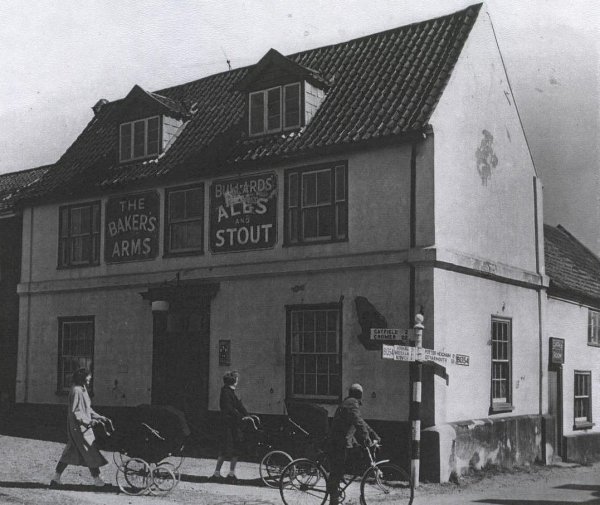
butcher stood The Baker’s Arms. This beer house had
been operating since 1842 and sold Bullards Ales and
Stouts. In 1900 the landlord was John Davey. The
Bakers Arms also had rooms to let which would have
been used by travelling salesmen and other visitors to
the village.
The Baker’s Arms sold only beer and had no pumps. The
landlord had to go down into the cellar every time a
pint was ordered and he was sometimes a bit reluctant
to go down just for one drink preferring to wait until
several had been ordered. This pub also incorporated a
bakehouse where local people could bring food to be
cooked in the oven. This building is no longer present
having been demolished in 1959. The place where it
stood is still known as Bakers Arms Green.
|
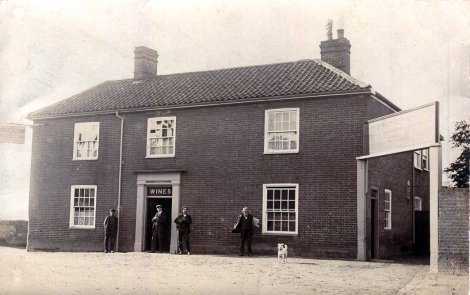
Opposite The Bakers Arms is the
King’s Arms pub. The King’s Arms was known
to be open in 1836 and is still operating as
a pub and restaurant today.
The present building is little changed from
the one which would have been familiar to
Ludham people in the 1900s. Daniel Chasteney
England was the landlord from 1883 starting
an association with the England family which
would last until 1922.
Edwin William Daniel England took over as
landlord in 1900 and this must have been in
addition to his duties at Englands
Millwrights next door.
|
At the end of The Street near to St Catherine’s Church
stands Crown House. This old building had many
uses in the 20th century, but as the century began, it
was the Rose and Crown Pub (sometimes just known as
the Crown). The pub had been established for a long
time and there is a record of it in 1752. In 1900,
Eldred Slaughter was succeeded by Sarah Slaughter as
landlord. Shortly after this, the pub closed down.
In 1907, Ebeneezer Newton established his business in
the old Rose and Crown premises. Ebeneezer was a
Miller and Corn Merchant as well as a Carrier and
Shipping Agent. Supplies arrived by wherry to Womack
Staithe or by train to Potter Heigham. The shipping
agent business was for emigration and you could
arrange here to start a new life.
Next door in what is now the Butcher’s shop was the
Grocery and Drapery shop owned by Grace Lyon from
1904.

|
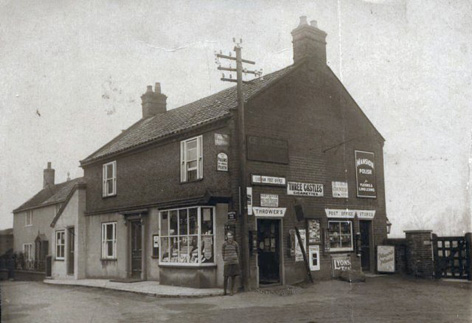
The village Post Office was located
next to the entrance gates to the churchyard.
In 1908, J. W. Dale was the post master.
The post office had been previously located in
Crown House and also in a thatched cottage
opposite the church in Norwich Road. However,
the shop next to the church gates was to be
its home for the next 80 years. The building
is still there and is known as the Old Post
Office. |
In the early 1900s, Staithe House in Staithe Road was
the wherry harbour where supplies for the village were
unloaded with warehousing for storage. In 1918, Dr
Brown, General Practitioner opened his surgery there
starting an associating with medical services in this
part of the village which still continues. Prior to
this, the village doctor called on people in their own
homes (if they could afford it). The surgery
facilities were very basic and there was no waiting
room. Patients simply queued out in the street waiting
their turn.
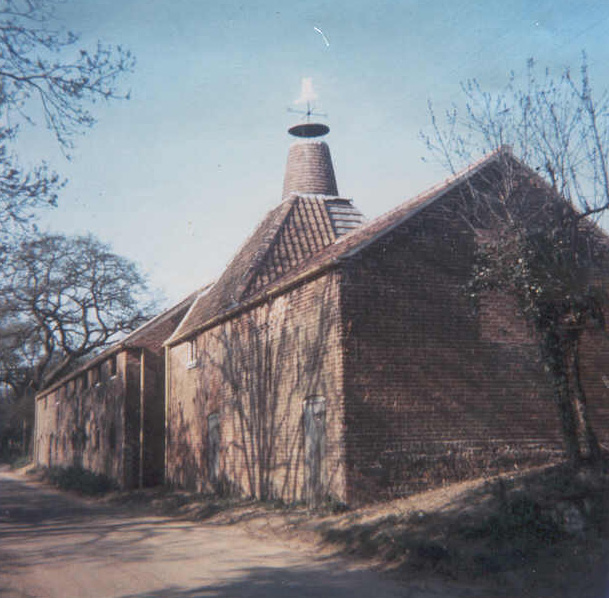
The Maltings at Womack Staithe
On the other side of Womack Water was Womack Staithe
in Horsefen Road. Here stood the maltings, a large
storehouse and next door were kilns for brick making
using materials quarried near to the site.
|
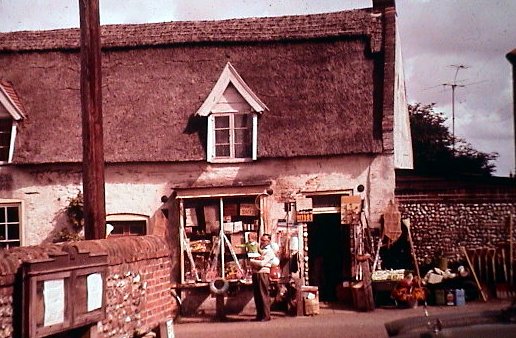
Next door to the King’s Arms in Norwich Road
stood the shop and premises of Samuel Knights,
Harness maker and Saddler. This shop is still
there and is now a tea room.
Horse power was very important to the farming
industry and this shop provided essential
services. Next door and to the rear of the
cottages were the workshops of the blacksmith,
Percy Salmon and Carpenter/Wheelwright Len
Bush.
There was even a useful stone outside to help
you get back on your horse. This stone
(actually an erratic left by a glacier in the
last ice age) can still be seen. |
Next to this was The Limes cottage (still there). In
the outbuildings of this cottage, Fred Thrower, Coal
Merchant and Pig Farmer had his business.
At the rear of Glenhaven cottage on Norwich Road was a
smokehouse for fish and Eldred Slaughter, Fish Dealer
(and Rose and Crown landlord) had his premises at No1
Alma Cottages.
Near to Ludham Bridge is the small hamlet of Johnson
Street. Here stands the Dog Inn which has been a pub
for many years. There is a reference to a building on
this site called Dog House in 1689 and the pub was
known to have been operating in the 1820s. In 1900,
the landlord was Thomas Smith. The Dog is now a
freehouse, but it used to be a Stewart and Pattersons
public house.

That was how Ludham looked in the early 20th century.
A farming community with local businesses providing
essential services. Plenty of pubs, an important
millwright’s business and shops to meet your every
need with plenty of competition. There were small
businesses too, builders, chimney sweeps, carpenters
and many more on a small scale. A self contained
place, but with the First World War, the pace of
change was gathering.
Between the Wars
Ludham lost is fair share of men to the Great War and
at the end of hostilities, former servicemen began to
arrive back in the area. As part of a government
scheme, some were allocated allotments or
smallholdings in the village others returned to former
work in farming, but there were changes happening on a
wider scale.
Motor transport arrived in the village in the form or
a regular bus service and a bus terminus was created
next to the Kings Arms. Here buses were parked
overnight while drivers lodged at the Kings Arms.
Motor cars too became much more commonplace although
the roads were still narrow and slow. Ludham lost a
lot of the isolation it once had.

The Kings Arms with the entrance to the bowling
green on the right
In 1926, electricity arrived in Ludham and was
available for connection to homes. Percy Turner’s
mother fell through the ceiling when the electric
wiring being fitted to the Kings Arms
Diesel pumps began to have an impact on the mill
industry and Englands Millwrights began a decline
which would see them close by the Second World War.
The Norfolk Broads themselves also began to change and
the process of replacing commercial boats with holiday
packages began. Womack Water was a popular place for
holiday makers to visit, and they began to use Ludham
shops and provide a boost to business.
The 1930s brought the depression and a general slow
down to which Ludham was not immune. However, Ludham
businesses continued to operate and adapt to changing
times.
In the 1920s, Gladys and Herbert Cook took over the
shop on the corner of School Road which is still known
by their name. They ran a grocers and general stores
helped by their two sons Humphrey and Donald. This
continued until the 1950s when Mrs Cook died.

Cooks Shop 1930s
H. D. Brooks moved his growing garage business
to new premises in The Street. This is the site of the
present Kings Arms car park and it had the Eastern
Counties bus park behind it.
England’s butchers and A. T. Thrower’s stores
continued to operate and grow as did the pubs and this
part of The Street must have seemed changeless. A. T.
Thrower also took over in the 1940s, the shop opposite
which had been run by Harriet Bond. This now became a
china and hardware shop selling a wide variety of
goods including linoleum, gardening equipment, nails
and tools.
In 1922 the Powell family took over from Grace Lyon
operating the shop as a grocery. This continued until
1942 when a bullet from a German aircraft killed Mrs
Powell as she sat at the dining table in the living
accommodation behind the shop. The bullet marks can
still be seen in the shop walls if you look carefully.

Powell's shop with Crown House beyond it.
In 1923, George Thrower took over as post master, and
with his wife Helen ran the shop as a post office and
general store. This family association continued after
George’s death in the 1960s, and Helen finally gave up
running the shop in 1989 at the age of 92.

The King’s Arms Pub continued to be an important part
of village life. The area where the restaurant is
presently located was known in the 1930s as the Green
Room, a good place for youngsters unless they were
caught by the policeman who sometimes stopped in the
pub for a drink. Where the present children’s play
area now is, there used to be a bowling green. The
King’s Arms had a large bowling team at this time. The
green was located behind the garage along with a small
car park and rubbish dump for the pub.
In Staithe Road, opposite the Manor Gates was a small
community bake house (people often did not have oven
facilities at home). In 1925, Liza Clarke opened a
sweetshop here. This building is still there although
reduced in size.
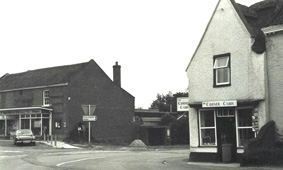
In the 1930s, Mrs Grimes opened a new tea rooms and
confectioners shop on the corner opposite the Kings
Arms.
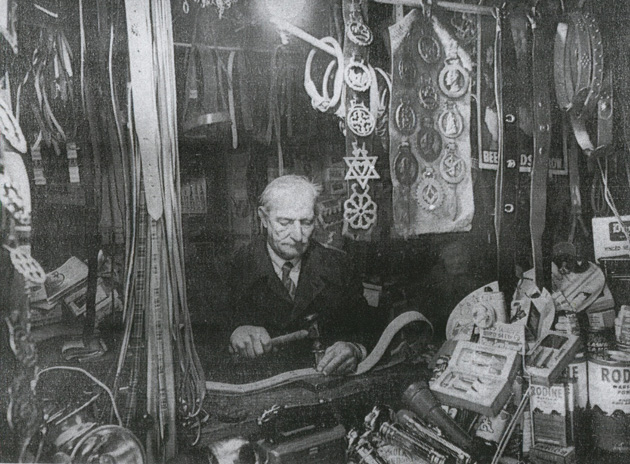
Inside the saddlers
In 1937, Albert Knights, son of Samuel took over the
Harness makers and saddlers shop in Norwich Road from
his father.
The small bungalow next to the Village Hall in Norwich
Road was opened as a fish and chip shop in the 1930 by
Mr Mulley. This continued into the 1940s and this
building is still there as a private house.
In the hamlet of Fritton were the workshops of Cyril
Bensley. Here he kept his threshing machines which
were used at harvest time on the local farms. Cyril
had three complete sets including steam engines (later
replaced by diesel).

The 1920s saw the opening of a new shop at Ludham
Bridge, called Ludham Bridge Stores. The shop was
started by Mrs Grounds in a spare bedroom at her
Bridge Cottage home. Her husband then built a wooden
shop in the garden which was subsequently moved to the
riverbank. The business moved to its present day
location across the road in the 1930s.
In the 1920s, Ernie Anderson opened a blacksmiths
business in School Road. Next door was Fred Riches, a
Carpenter. The building, almost opposite the school is
still in use today as a boat engineering business.
The Second World War
The Second World War had a major impact on Ludham
Village. An army camp was set up in the village and a
airfield was built. This brought a large influx of
people into the village and pubs and shops saw a new
source of customers. Beulah Gowing (Turner)was the
daughter of the Kings Arms Landlord, Percy Turner. She
recalls that locals were rather suspicious of these
incomers drinking all their beer. However, the pub was
a lively place with a happy atmosphere even when the
beer ran out.
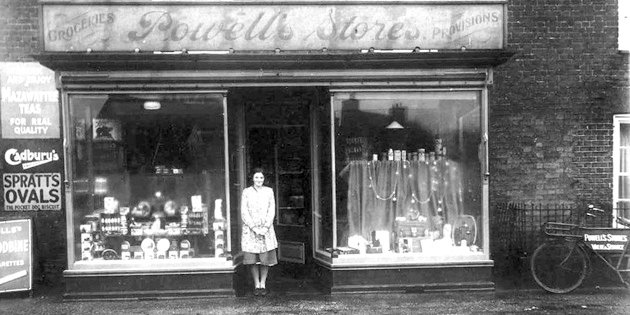 Powell's Store
Mrs Brooks from Ludham Manor was now the owner of the
butchers shop in the Street having taken over from the
Englands.
A. T. Throwers and the butchers next door had a
miraculous escape from destruction when an aircraft
crashed into the opening between them. Russell
Brooks and Cyril Thrower were among those who rescued
the pilot from the burning wreckage and received
commendations for bravery.

Plane crash outside Throwers also showing the
Baker's Arms
Post War Growth and Change
Ludham businesses had an air of permanence between the
wars, but the period immediately after the war saw a
lot of changes. Britain was at the point of economic
collapse after the war and it was essential to build
up new businesses and industry. Ludham responded to
this with a wave of new businesses and changes to the
old ones.
New houses were built replacing the old army camp and
the process of agricultural mechanisation began,
resulting in the loss of many traditional farming
jobs.
The post war austerity gradually gave way to rising
affluence and greater mobility with improved bus
services and car ownership. Holiday makers began to
come to the Norfolk Broads in increasing numbers and
the use of trading wherries on the waterways died out
altogether. There was no further need for windmills
and pumps, and most fell into disrepair. England’s
millwright business had ceased trading and the
workshops were demolished.
Gladys and Herbert Cook were still trading in their
shop on the corner of School Road. This continued
until the death of Mrs Cook in the 1950s. The shop
then had a series of owners over the next 30 years.
Their son Humphrey was first. He married Lilia
Moll after his first wife died. The shop continued
trading under the ownership of the Lithgows, Gibbs and
Betty Warren. Betty opened “Aarons Nook” a tea room
which was accessed by a difficult climb up narrow
stairs. This was a fairly short lived venture, and the
shop was sold to Betty and Ernie Taylor before it was
finally converted into 3 private dwellings by the
Sedgewicks. In the early 1960s, there was a large fire
at the shop which burned down all the outbuildings
(former cart sheds and stables) where the shop stores
were kept.

Cook's Shop
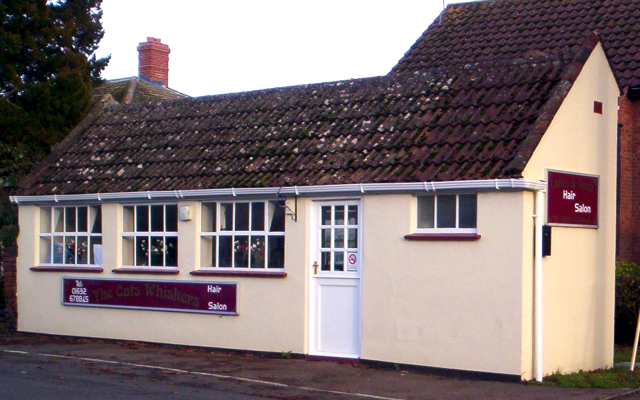
The small shop on The Street which had once housed H.
D. Brooks’ cycle shop and later Clark’s shoemakers
began a whole string of different uses after the war
(when it had been a waste paper store). In the 1950s
it was Mc Bride’s cobblers. Then in the 1960s it
became Gale’s Barbers shop and then Robert’s
Hairdressers. By the 1970s, it had become Sun Boats, a
boat agency and then reverted back to a cycle shop run
by the Sparrows.
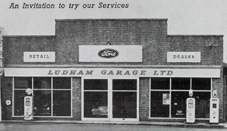
Ludham Garage moved to its present
Location replacing the former England’s
workshops and a wooden house next door which
belonged to another Mr England. This section
became the current garage forecourt and the
round ball from the dividing wall can still be
seen today as a last reminder of the former
use of this part of the site. In the 1950s,
Alex Snelling took over the ownership of the
business followed by Mr Littleworth and then
the present owner Arthur Clarke in the 1960s.
The new premises allowed this business to
expand with large workshops and car sales as
well as forecourt services. |
|
The wooden shop at Folly house which had been the
former site of the garage was sold to a well known
actor, William Mervyn. He demolished the shop and
built a flat over the garages.
Edward (Ted) Hall took over as the butcher in the
1950s. He died in 1956 and was succeeded in 1957 by
Sydney Sexton (also owner of Fines of Horstead). In
1958, A.J. Gower took over the business and it
continues to trade under this name at the present
time. In 1964/5, this shop was demolished to make way
for an extension to Thrower’s supermarket and the
butchers business moved further down The Street into
the shop which had been the Powell's store. It is
still there.

The butchers
In 1956, Cyril Thrower and his wife Lillian took over
Throwers shop from his father. The business continued
to grow and in 1965 was considerably expanded when the
supermarket was created by extending the shop onto the
site formerly occupied by the butchers and by
purchasing the former 3 story house next door which
had been destroyed by fire.. This shop gradually
became the dominant supplier of groceries in the
village and the other shops began to decline and
change to other uses. In 1970 a hairdressers was
opened above the shop and in 1989, the village post
office moved to its present location inside Throwers.
Throwers gave up the china shop opposite and in the
1980s, this became a Fax and Copier service ( a real
sign of changing times).
The Kings Arms pub continued to prosper and was able
to extend into the area which had been the bus park
and H. D. Brooks Garage. The Baker’s Arms opposite,
was not so fortunate. It was in decline and in 1959 it
was demolished as part of a road widening scheme. The
grass area near the present bus shelter is called
Bakers Arms Green after the pub which once stood
there. The road widening scheme was long overdue and
removed the major bottleneck in the middle of the
village along the Yarmouth and Norwich Roads. The last
landlord of the Baker’s arms was Harry Warren. Harry
had a hair cutting sideline to his pub business and
this was located in the stables and outbuildings
behind the pub. It cost 6 old pence to have your hair
cut. Harry also charged accumulators to run wireless
sets. This service also cost 6 old pence.
|
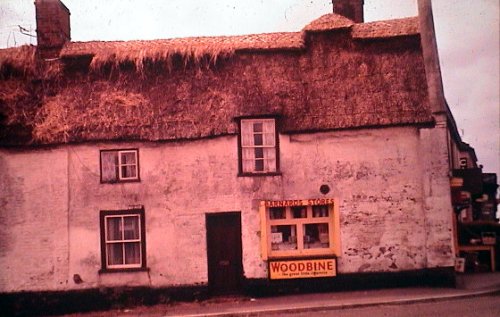
The
corner shop opposite the Kings Arms had
started as a tea room and was taken over in
the 1940s by Colonel Taylor a solicitor.. It
changed hands again in 1954 and became a
confectioner, cigarette and post card gift
shop catering for the increasing tourist
trade. At first Pam Hales ran the
business. It changed its name in 1961 to
Barnard Stores and in 1964 Pat Lambert took
over. In 1965 Babs Hall ran it as a gift shop
and crafts followed in 1988 by Ann Sparrow.
Babs introduced the name “The Corner Cabin”. |
At
Crown
House, Ebeneezer Newton died in the 1940s and Eddie
and Arthur Newton continued to run the business as a
Corn and Coal Merchants. In 1945 Wilfred and Kathleen
Brown (nee Newton) took over as agents for Bessie and
Palmer’s Coal Merchants. The building also housed a
branch of Barclays Bank open on Thursday mornings only
during the 1970s. Anne Newton Sparrow (nee Brown) took
over in 1979. Behind the house were stables and lean
to sheds for animals. There was also a well and a
store and weighing room for the corn. The house had a
big cellar for storing the beer barrels in it’s pub
days and if you walk in at the back, there is still a
row of coat pegs which were used by the pub customers.
Next door, the Smiths continued to operate their
grocers shop. They were succeeded by the Hudsons in
1950 and in 1958, the Knights transformed the shop
into a Dairy and Café. In 1962, Mr Howe took over the
café and in 1964 A. J. Gower butchers moved into the
shop from their former premises further up The Street.
This shop is still trading and the living
accommodation where Mrs Powell was killed has been
converted into 2 flats.
During the war and into the 1950s, Harry Grapes had a
Fish and Chip Shop at Nos 3 and 4 The Street which is
opposite the Old Post Office. Harry also made and sold
wooden toys which were much in demand during the war
(as were his chips). In the 1970s, this became Cramb’s
Drug Store and then Patricia’s Cake Shop and Norma
Sayce’s Cake Shop. These are now private houses.
In the 1940s, the former bake house opposite the Manor
Gates in Staithe Road was another Fish and Chip Shop
(Abels). It also sold milk and was a children’s clinic
supplying fruit juices which were considered to be a
necessary supplement for children at that time.
The Post Office was still being run by Helen Thrower
(see above).
Ludham Manor was owned from the 1930s by Mrs Armitage
(who later remarried and became Mrs Brooks). Before
the war, the Manor had a “Bird Sanctuary” in the
garden and still had some caged birds after this time.
In the post war period it also had The Fairy Garden in
the grounds. It was possible to walk through the Manor
grounds and see various “fairy” houses, wishing wells
and other displays. There was a tea room and gift
shop.
Mrs Brooks drove about in a polished black van with a
liveried chauffeur. She always wore a shawl on these
occasions.
Mrs Brooks left the Manor to Dr Gabriel in the 1970s.
Some small craft industries moved in for a while
including a violin maker and a sculptor, also Mr
Elphick (restorer), A. Read (upholsterer) and R. Bacon
(furniture maker).
 A well
at the Fairy Garden
A well
at the Fairy Garden
Full list of doctors in the Ludham Practice:
The Manor
1879-1918 James Alexander
Gordon LRCP LRCS (Edin) LM
Staithe House then new surgery from 1977.
1918-1947 Evelyn Kempson Brown MRCS
LRCP
1947-1964 Peter Remington Wilson MA
MRCGP MRCS LRCP
1955-1959 Geoffrey Leon Bolt VRD MB
BS FRCP (Assistant 1953-54)
1959-1982 David Wilson Gabriel MB BS
MRCGP
1962
Leo House Surgery built, Stalham Green
1965-1997 Duncan Alexander Edmonds
MB BS D(Obst)RCOG
1971-2002 Robert James Terry Jarvis MB
ChB FIMC RCSEd MFFP &D(Obst) RCOG (Trainee
Assistant 1970-1971, Assistant 2002- )
1982
James
Smallwood Savage MB BS MRCGP DRCOG
1989
Sheila
Sudlow BSc MB ChB MRCGP DRCOG (Assistant 1987-1988)
1997
Andrew
Colin Buchanan Sale MA MB BS MRCGP DFFP & DRCOG
(Trainee 1995-1996
|
|
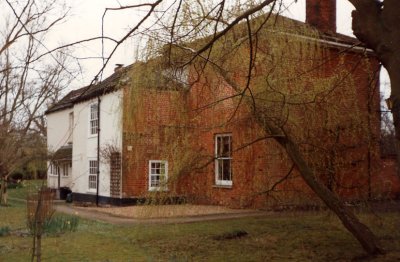
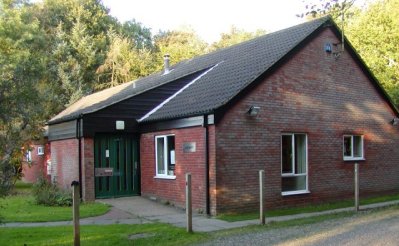
Staithe House is now a private dwelling.
The purpose
built surgery now stands nearby in what was once
part of the Manor grounds on
Staithe Road. This was built in 1977.
In the 1980s, Peter Bearman, an artist, opened a
studio displaying his paintings at No3 Yarmouth Road
(opposite the bus shelter). In 1985, Peter Elphick
took over this shop as a paintings and bric a brac
shop. In 1989, Trevor Sparrow converted it into an
antiques shop and in 1990 it became Flowers by Kim, a
florist. It is now a private residence.
In the 1960s, in the Beeches Barn, Horsefen Road,
Douglas Wright (owner of the Beeches) and his partner
Alex Snelling opened a new business – Ludham Plastics.
This was a short lived venture.
From the 1950s, Thompson Thrower (Pat) ran an
undertakers business from Woodlands in Horsefen Road.
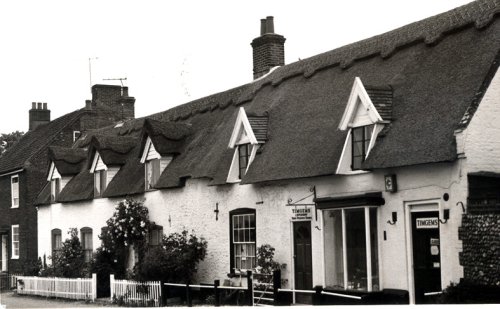
In Norwich Road, Albert Knights (known as Knacky)
continued to operate the harness maker and saddlers
business he had inherited from his father in 1937.
After the war, with farm mechanisation, the demand for
this type of work declined so Albert opened a hardware
and fishing tackle shop to supplement his business.
Albert was something of a character who drove about in
a vintage Rolls Royce. He was a great raconteur and
enjoyed telling tall stories to tourists visiting the
village.
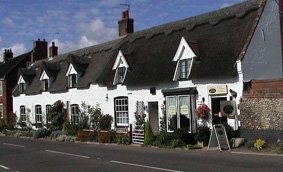
| When Albert died in 1968, the shop was
sold and reopened in 1970 as Tim Gems, a
jewellery shop run by Tim Snelling. |
|
|
In the 1980s, the shop became a tea rooms,
first operated by Margaret Bacon (Margaret’s
Tea Rooms) and then by David Mason and Daphne
and John Larkins (Alfresco). Alfresco is still
in business. |
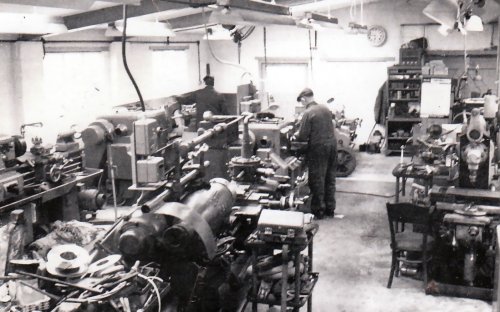
Behind
Dormers
and in premises formerly used by Percy Salmon
(blacksmith) and Len Bush (carpenter/wheelwright),
Russell Brooks opened the R.O. Brooks Foundry in 1947.
The business was here until 1952 after which it moved
to the other side of Norwich Road to a site between St
Catherine’s Church and Heronway. [29] This business
was a metal foundry producing brass castings.
In 1984, the business was sold to the Norwich Foundry
Company who continued the business until 1986 when the
site was sold to Trend Marine who started making boat
parts there.
In 1990 the site was again sold to the Latham Steam
Boat company, and then again in 1997 to Environair
Systems, an air conditioning company which still
operates its factory on the site. The owner is Kelly
Jermy.
[26] In the 1940s and 50s, Edward Hall had a butchers
shop at Glenhaven in Norwich Road. He later closed
this shop and bought the butcher’s shop in The Street
from Mrs Brooks.
In 1974, it was decided to build a new vicarage in the
grounds of the old one on Norwich road opposite the
church. The old vicarage was a large house and this
was sold. At first it operated as a guest house with
Mr Batty in charge. In 1990, it became a nursing home
and that is still its current use.
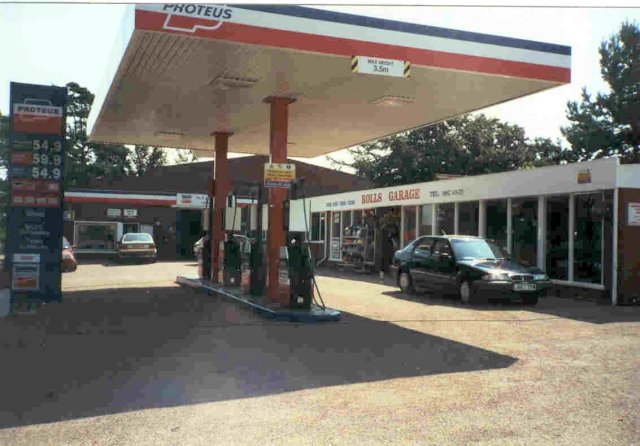
In the early 1950s, a second garage/filling station
was opened in the village, this time on Norwich Road.
This was operated by J. S. Roll and Sons and was known
locally as Rolls Garage. The buildings were expanded
and modernised in the 1960s and 70s and the garage
continued to operate until 2003 when it was demolished
and replaced by 3 houses.
Just before the war, Raymond Pegg opened a cycle shop
in a green wooden shed in the garden of The Stone
House at Johnson Street. They also sold cigarettes and
sweets. This operation continued until the 1960s when
it moved into the house and then subsequently closed.
Ludham Bridge Stores continued to trade after the war
catering for the growth in the boating trade which
brought many tourists to Ludham Bridge, a natural
stopping point on the river Ant. In 1966, Mr and Mrs
Paul took over the business operating it as a stores
and restaurant. A small wooden shop run by the
Parkinsons and selling goods for boats was closed just
after the war and removed.
John Brinded took over the former blacksmiths and
carpenters shop in School Road in the 1990s He
still trades there as a boat engineer.
In the early 1950s, Alex Snelling opened an
agricultural machinery business in a thatched barn in
Malthouse Lane. Unfortunately, this business was
destroyed by fire a few years later.
In the 1950s, the Gollings had a shop on Womack Water
where the riverside houses are now situated. Another
shop was started by Alex Snelling next to the boatyard
(see boatyards chapter) Both shops were boat supplies
and gift shops. The shop near the boatyard has been
redeveloped, and continued to trade as a gift shop and
basic supplies for boats.
After the war, the runways at Ludham airfield were
removed apart from one concrete runway which still
remains as Ludham airstrip. The concrete was used for
road building projects elsewhere and most of the
airfield reverted to its former use as farm land. Some
hangar buildings and the control tower remained. The
hangar known as T2 Aircraft shed (1947-1959) was used
by the Home Office Stores for repairs to fire engines
and fire pumps. Harry Bensley was in charge.
Employed there were drivers John Bensley, Gordon
Barber and repair men Ronnie Myhill, Wilf Taylor, Bob
Turner, Denis Smith and Kenneth Dowe.
This was closed in 1959 at about the same time the
rest of the runways and taxiways were broken up for
road making. There was a concrete crusher set at the
end of runway 26 near Lone Lane.
A little later, the blister Hangar was moved to its
present location at the end of the runway. This hangar
was not originally from RAF Ludham although similar
ones were used. Rod Hull rebuilt a spitfire in the
hangar after the war. He is still building aeroplanes
in Catfield.
In the 1960s a crop spraying business operated from
Ludham Airstrip and later the airstrip was given over
for the use of small private aircraft. It is still in
use today and is owned by a group of local pilots.
End of the century, winners and losers.
The latter part of the 20th century brought increasing
affluence and greater mobility to everyone in Britain.
In addition, it brought rapid changes to industry and
an increasing pace of life. Ludham was not immune to
these forces and the village businesses reflected
this. Farming became highly mechanised and the number
of jobs on the land dropped, however, travel was much
easier and there was no problem in travelling to work
elsewhere.
Norfolk Broads holidays peaked in the 1970s and have
been in decline since that time, but Ludham remains a
popular destination for tourists and Womack Staithe is
packed with boats in the summer months bringing
visitors to the local pubs and shops.
Out of town supermarkets and other large stores have
had a significant impact on many villages, but Ludham
is very fortunate to have retained its shops and Post
Office where others have failed.
Throwers store has been a big success. In 1993, Tommy
and Delia Thrower took over the running of the store
and now Guy Thrower is the 4th generation of the
family to manage the business. In 2002, Throwers
celebrated its centenary and the local MP cut the tape
starting the next 100 years of trading. Not a bad
result for a business whose competitors did not give a
year when it began.
Throwers has incorporated the village post office
since 1989 and also has a hairdressers upstairs. Diane
Hurn took over styling hair at this location in 1987.
A. J. Gower, the butchers was also still trading at
the end of the 20th century with a good reputation for
excellent products.
Ludham Bridge Stores was also going strong catering
for the seasonal needs of tourists visiting the
village. The gift shop at Womack Staithe was also
still operating next to the boatyard.
Flowers by Kim moved to the shop opposite Throwers on
The Street in 1998.
John Brinded continued to run his boat engineers
business in School Road.
Ludham Garage remains a successful business. It is a
Ford dealer with repairs and car sales as well as fuel
supplies. This is one of the few garages that still
offer personal service and fill up your car for you.
Arthur Clarke is still the owner.
The small building on The Street which has had so many
uses down the years, is now a hairdressers – The Cat’s
Whiskers. Sue Barff and Carol Cutmore are the tenants.
Alfresco tea rooms is still trading, offering
refreshments to locals and tourists.
The Kings Arms and the Dog Inn are Ludham’s two
surviving pubs. Both offer food as well as drink and
do a lively trade summer and winter.
The corner shop opposite the Kings Arms closed in 2002
and is now a private house. Crown House is also a
private dwelling. The Old Post Office was refurbished
over a 2 year period after the post office moved to
Throwers in 1989. It became an antique shop and later
a restaurant called Barnaby’s Bistro. It is now a
private house. Numbers 3 and 4 The Street are also now
private houses along with Staithe House, No3 Yarmouth
Road, Woodlands, Cooks Corner, Dormers, The Limes,
Glenhaven, No1 Alma Cottages, Rolls Garage, The Stone
House and the bungalow next to the Village Hall.
Many of the other post war businesses have faded away
over the years, but Ludham remains a lively and active
village with good shops and a thriving summer tourist
trade. We hope you have enjoyed this visit to 100
years of Ludham business.
|
|
|